Thursday, October 6, 2011

Graphing Inverse Functions

Last Lesson, we learned about inverse functions. By now, you should have a basic idea of what an inverse function is and how to solve an inverse function. Today, we're going to go deeper. We're going to try to map out an inverse function on a graph!

To make the most out of the lesson, please make sure you are comfortable with interpreting and plotting simple linear graphs.

Alright.
 Look at this graph...or graphs

Pay attention to the blue line. Ok. Now, lets work out the inverse of the blue function f(x)=2x+1...If you do not know how to do this, go back to the last tutorial and LEARN !!! You're going to be seriously confused if you don't read that post! Alright...Enough ranting, lets solve.

Use the algorithm I told you guys about in the previous post.

1. f(x)=2x+1

2. y=2x+1

3. x=2y+1

4.  2y=x-1
   y=(x-1)/2 (Divide each side by 2 to make 'y ' the subject)

5. f^-1(x)=(x-1)/2

Now, are answer is in fact, the red line! If you plot them onto a graph, you get two linear equations, and yea, I think the graph gives it away, the inverse is basically a reflection in the equation y=x !!!


So, next time you plot a graph....if you want to map the inverse on a graph, simply draw the line y=x (shown above), and reflect all your points in the original function in the line y=x to get the graph of the inverse!.


Magic.

Wednesday, October 5, 2011

Introduction to Inverse Functions

When you get to pre-calculus, you might have to learn inverse functions....What is that? It's basically, a function that undoes another function.Yea, what does that mean? Well, let me show you how it is done and maybe then you will have a better understanding.


lets take the f(x)=x+1. We want to find the inverse.

YOU SHOULD BE COMFORTABLE WITH REARRANGING EQUATIONS

Follow these steps:
1. set f(x)=y
2.y=x+1
3.swap the x's with the y's.so, in this case, it'll look something like this
      x=y+1
4. Rearrange to make y the subject.
  Lets do it: y=x-1

now...functions are denoted as f(x)...inverse functions are denoted as f^-1(x)

so your final answer will be f^-1(x)=x-1

The highlighted part is the most important, so be sure to memorize it!

Lets do another problem with the Step by Step approach:
Find the inverse of f(x)=3x+2

1. f(x)=y

2. y=3x+2

3. x=3y+2 (I swapped the x's' with the y's, its that simple)

4. Rearrange---
x=3y+2
x-2=3y+2-2
x-2=3y
(x-2)/3=3y/3

y=(x-2)/3

so your answer is f^-1(x) =(x-2)/3

A simple introduction...Later, we're going to learn how to map out inverse functions, graph them, and more.

Multiplying functions

We know how to add functions such as X+1 and X+2.

So,how do we multiply these functions?
Don't, mind me saying, its actually dead easy.

so, lets take a function. (A+1). And another function we want to multiply...lets say (A+2)...A is basically any number...

Skills required to continue:
1.2nd grade multiplication ability...
2.Ability to treat letters as numbers...
3. You know what powers are.

 So, lets first set up our problem.

(A+1) x (A+2)
However, conventionally, we can omit the 'x', so the question simply becomes:
(A+1)(A+2)

now...
WATCH, as I unravel the secrets of multiplying this out.

It goes like this
(AxA+2xA+1xA+1x2)

First multiply the first A by the first A in the second function.
Then multiply the first A by the 2 in the second function.
Now, multiply the 1 in the first function by the A in the second function.

Lastly, multiply 1 in the first function by the 2 in the second function.

So, basically, each term in one function has to multiply each of the numbers in the 2nd function.

Sounds complicated.

Then, according to the signs, add or subtract...In this case, its addition as all the numbers involved are positive.
So, completing what we had above.
Answer:
(A^2+3A+2)

If your still confused, I bet you will be, i'll post a bunch of exercises and solve them on the spot!


Introduction to Absolute Value

In Highschool and College, absolutes values are so commonly seen. That is why it is important to understand what it is about.

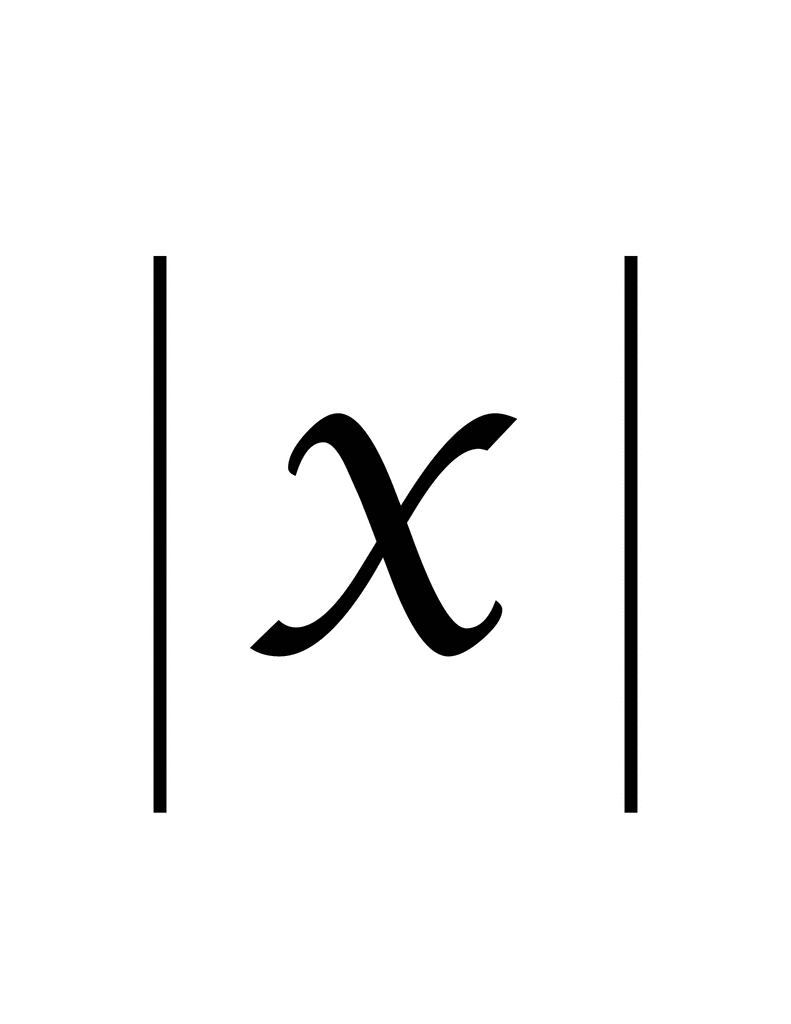
First, what does an absolute value look like?
Something like this:


Yea. So, in order to make the most out of what's next, please make sure you have at least an elementary understanding of functions, algebra...Otherwise, you might end up being confused and thats the last thing I want to happen.


So. The 'X' has a value...It could be anything...6,4,435,43,-45,435,43,5. Doesn't really matter.
So, now you might ask, What on earth are those two vertical lines for, surrounding the X?

I'm glad you asked. What the two lines do are they basically make sure the value of X is ALWAYS POSITIVE

If your going to take out anything from this lesson, its what I just highlighted!!!!

Basically, if X=-2, the two lines will make X=2
If X=-5464564, the X will it positive whatever I just typed.
.....
That's probably even easier than addition...

Next time, we'll try to map the absolute functions on a graph.

Tuesday, May 17, 2011

1. Well, what happens? You tell me. Wait, if you knew, why would you be here? Oops, Sorry.
Anyway, what do Red  Blood Cells do? They carry oxygen around the body right? How? Oxygen can combine with the Hamoeglobin in Red Blood cells to form what they call, Oxy-hamoeglobin.

So an appropriate answer would be, Red blood cells 'take up oxygen' and becomes oxy-hamoeglobin.Right?

b) What do White Blood Cells do? In GCSE level, they essentially produce two types of antibodies, Lymphocytes and Phagocytes, to protect the body from pathogens, bacteria, harmful stuff. So that's probably what its existence in the alveolus is for. PROTECT THE LUNG FROM PATHOGENS!!!

Radiation---An Introduction

In life, radiation is integrated into three different types, Alpha, beta and Gamma Radiation. You must have all heard of the term 'Radiation', but this post is more concerned about Radiation into specifics. But not too complicated. Just a basic idea of the types of radiation and the hazards each radiation poses. After all, not all of you want to be Radiologists. BUT we do want to be able to save our selves from the adverse affects of technology, hence emphasizing the importance of understanding all this.

 Before we continue, I want to loosely define the term radiation: Wikipedia defines radiation as: radiation is a process in which energetic particles or energy or waves travel through a medium or space

Now we got that out of the way, lets move on into what we really want to know

Alpha Radiation
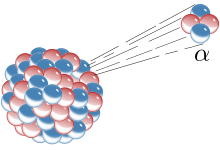
 The picture on the right is an Alpha radiation model. The blue and red bits symbolize Neutrons and Protons. I will do a separate post about that later on.

Alpha Radiation is a type of 'energy' decay which releases an Alpha particle. This transforms into into an atom with a mass number 4 less and atomic number 2 less, also equivalent to that of a Helium Atom.

The example below is a good illustration of what I'm talking about.

238
92
U
 
→  234
90
Th
 
+  4
2
He2+
 

The Uranium loses 4 mass numbers from 238 to 234 and it also loses two protons; from 92 to 90. If you don't understand what I'm talking about, feel free to check out my tutorials on Protons, Neutrons and Electrons.

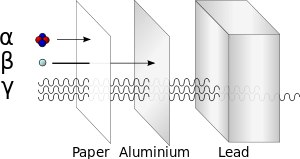
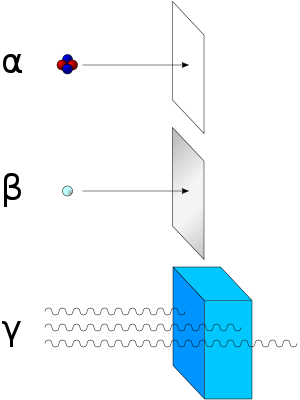
Alpha Particles have very little energy. Alternatively, we can say that it has a low penetrating power.. If you zap a ray of Alpha Particles into a sheet of paper, most of the particles will be absorbed. That's how weak it is.

Beta Particles

Beta is the particle in the middle. Beta radiation does not release a Helium Atom, but a Electron, hence making it negatively charged. Take a look at this example.


A neutron is converted into a Proton, and in the process, an electron and an electron anti neutrino is emitted. Lets forget about the electron anti-neutrino, that is hardly elementary, and just remember an electron is emitted, and that beta is NEGATIVELY charged. ok, good.

The 'Penetrating' Power of Beta Radiation is much stronger than that of Alpha, as it can easily penetrate paper. However, it cannot penetrate a piece of Aluminium, which is of an order of magnitude thicker than that of paper!


Gamma Radiation
I am pretty sure most of you have heard of this type of radiation.

Thankfully, Gamma Radiation carries no charge. However, it carries the most penetrating power, being able to comfortably penetrate most of a thick piece of lead. It is a form of electromagnetic radiation which can cause genetic mutations

There is a whole lot more about Gamma radiation, for this lesson, i'll adhere to brevity and simplicity.

Friday, February 4, 2011

Factors of Production

In a business, it is important to consider the factors of production, or commodities used to produce goods.
The 'four factors of production' in a business are:

1. Land
2. Labour
3. Capital
4. Entrepeneur.

1. Land
: is the natural resources and therefore includes not only the land that we stand on, grow crops on and build upon but also fisheries, mines and forests. The Payment given to the owners of land is rent.


2. Labour
: is defined as all the physical and mental effort devoted into the production process. The payment for labour is called salary/wages

3. Capital
: is the manufactured resource that is used in the production process. These are things like machinery, things that can help the business produce things. Payment to capital is interest.


4. Enterprise
: Is the unique ability someone in the business has to organise the factors of production and implement changes in a business to allow the business to be profitable.

IGCSE Coordinated Science June 2010- Paper 4 Part 2


(c) The formula for Momentum= Mass x Velocity

The mass here is 400,000 kg and the Velocity is 60m/s so the momentum will be

= 400,000 x 60
=24000000 Kg m/s Remember units !!

(d). After finishing reading this question, you can pretty much deduct that you are supposed to draw
 1.Four cells
 2. A switch
 3. A lamp.

Draw a rectangular box and fit these components mentioned above in series, or inorder words, make sure they are connected in the same line.

(ii) Well, there are four cells, each with a voltage of 1.5 V so we simply multiply 1.5 four times to arrive at 6V.

Weimar Republic Part 2

Throughout the reign of the Weimar Republic, there were some crises that occurred.

This blog post will explore some of the crises the Weimar Republic faced.

Crisis 1: Ruhr Crisis

Remember back in my Treaty of Versailles blog post? One of the terms stipulated that the Germans had to pay a 'reparation', or 'fine' of 6.6 billion dollars. The Germans paid, but not to France's expectations, so in January 1923, French troops marched into the 'Ruhr', which was Germany's most important industrial region.

The Germans responded with 'Passive Resistance', which meant refusing to have anything to do with the French and, in particular, refusing to work. The problem here was that Germany was now losing all that the Ruhr would normally have produced; passive resistance was infact making Germany weaker !  

Crisis 2:  Hyper-inflation


The next crisis was also a very significant economical one. The Germans did not have enough money to pay for the costs of the passive resistance in the Ruhr, so it simply printed more money. For those studying economics, you should know that when a government prints money which it does not have, the value of money goes down and prices go up. This is exactly what happened.

This is called HYPERINFLATION. The effects were disastrous. From the photo on the right, you can see how worthless money became due to hyperinflation. The middle-class, who had savings and pensions, were most greatly affected.

People did not blame the Kaiser for the crisis. They blamed the Weimar Republic, which had agreed to pay reparations.


Crisis 3: The Munich (Beerhall Putsch)


In 1923, the Chancellor of Germany, Gustav Stresemann, decided that Germany would give in to France and continue paying reparations. To those who hated the Republic and particularly to the gangs of right wing extremists who had made the southern state of Bavaria their base, Stresemann's decision was a betrayal. Encouraged by the Bavaria Government, they plotted a putsch against the Reich government. On 8-9 November, Adolf Hitlers NAZI party launched an attempted revolution in Munich. It was easily crushed but it was an example of the violent political extremism and hatred towards the Weimar Republic.

Thursday, February 3, 2011

Weimar Republic

After the German 'emperor' was destroyed, a new form of democratic style rule was established, and the new system in which Germany was to be governed was called the 'Wiemar Republic', or in German, Weimarer Republik. This tutorial will explore the constitution of the Weimar Republic and the strengths and weaknesses within the republic.

WEIMAR CONSTITUTION DIAGRAM


The Presdient, in this case, is re-elected every seven years. Also, there was this Article you should acknowledge. The article was numbered 48, and it stated that 'in an emergency the President could make laws without going first to the Reichstag'. This article plays an instrumental role in the rise of the Nazis in the future.

The Reichstag is a bit like the British Parliament. Parties were voted under 'Proportional Representation', where the number of seats each party had was 'directly proportional' to the number of votes they had.
Fredrick Ebert, President of Germany from 1919-1925

Phillip Scheidemann, Chancellor of Germany, 1919

So, thats the constitution. Now we have to appreciate the strengths and weaknesses of the constitution.

Strengths
1. All Germans had equal rights, including the right to vote

2. Proportional Representation made sure that political parties were allocated seats in Parliament in proportion to the number of votes they had. This was fair.

3. A strong president was necessary to keep control over the government and to protect the country in a crisis.

4. Each state had its own traditions. It was right they should keep some control over their own affairs.

Weaknesses
1. In 1919, the Republic had many enemies. It would not be sensible to give equal rights to those who wish to destroy it.

2. Proportional Representation encouraged lots of small parties which each got a small number of MP's. No one party could get a majority, so governments had to be coalitions (many parties together). There could never be a strong government.

3. The President had too much power and he had article 48. There was a chance he may become a dictator.

4. The states could be hostile to the national government, and even try to overthrow it if they had power.

IGCSE Coordinated Science Past Paper---June 2010--Paper 4- Analysis

Question 1


(a) (I) From our knowledge on Blood Circulation, we should acknowledge that the blood is 'oxygenated' after it travels to the lungs and then comes back to the heart. So after traveling to the lungs, the blood flows back to the heart. At here, the blood is oxygenated. And afterwards, when the blood is pumped to the aorta, it is also oxygenated because it will then be carried around the entire body. So this is the Pulmonary Vein and Aorta, therefore, from the model, C and D contain oxygenated blood. C is Aorta and D is the Pulmonary Vein

(II) Blood flows from A to B to D to C in a cycle.  The vein carries the blood TOWARDS the heart. From A to B to D to C, how many times is the blood pumped toward the heart? Once at A in the vena cava ( a type of vein) to transport DeOxygenated blood to the heart and once at D, to transport oxygenated blood from the lungs to the heart via the Pulmonary Vein, so A and D are veins.


(III) The Bicuspid valve is located slightly below the 'Left Atrium'. Blood flows to the heart through chamber D. A valve opens and closes as blood flows through, so as the blood flows through chamber D to reach the ventricle, the atrium contracts which forces the bicuspid valve to open. This is a key point.
When the blood flows through the atrium and arrives at the ventricle, when the ventricle contracts to pump blood to the aorta, the bicuspid valve closes.

1b


b. There is more oxygen in the right side of heart in fetus as there is a mix of oxygenated blood from placenta and deoxygenated blood from body tissues.


c. (I)Red blood cells contain hemoglobin, which helps red blood cells carry oxygen.
   
(II) This pigment is out of protein.
   
(III) The mineral needed in the diet to enable the body to make this pigment is iron.  
   
(IV) To approach this problem, think about why foods such as protein and carbohydrates need to be digested. Of course, there too large to simply be absorbed. But inorganic ions are small enough to be directly absorbed, so therefore it does not need to be digested.

 (V) What do we need to survive? We need to respire! And what do we need for respiration to occur? We need OXYGEN!!! So, we need oxygen for respiration to occur to allow our bodies to release energy and ultimately allow us to continue surviving.


2 (a) (I) Ultraviolet radiation harms the skin, and can cause skin cancer. Ultraviolet can also damage DNA.

       (II) Well, what do you do when you go to the beach to prevent being sun-burnt? Well, you can put on sun block/ sun tan, or protective clothing, any will do fine.

 (b) Formula Speed=Distance/Time

You have a distance and a time, so you will use the classic Speed=Distance/Time formula

The distance in this case is 300x2.This is because the echo travels to the wall and comes back, so distance is 600m. And it takes 2 seconds. So plug the numbers into the formula.

 Speed = 600m(Distance)/2seconds (Time)
            = 300 m/s (Remember the units!!!)


Who would control Germany after World War I?

Who would control Germany after World War I?

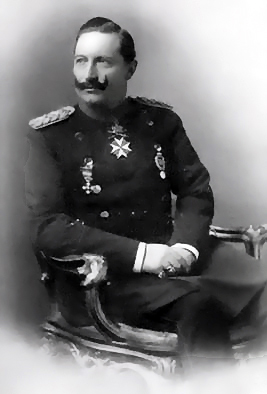
During and before World War I, Germany was controlled by an emperor, and the last emperor to rule Germany from 1888-1918 was Kaiser Wilhelm II. After Germany lost the war, they were forbidden to have an emperor, and Kaiser Wilhelm abdicated (resigned) and fled to Holland.

Now, if Germany was not allowed its traditional 'monarch', emperor style rule, who would govern Germany? By the way, the photo on the left is a picture of Kaiser Wilhelm.

With the Kaiser gone, the social democrats were in charge, but they were by no means, 'In control'.

Remember in the last tutorial? In one of the terms of the treaty? Where the army was limited to only 100,000 men. What happened to the men in excess? Well, they all went home. Actually, not all of them. Some of them started joining parties that wanted to overthrow the Social Democrats.

The Left Wing Revolutionaries wanted a revolution, and they wanted to get rid of the new President of Germany, Fredrick Ebert and essentially govern Germany by themselves.

An example of a left wing organization which attempted to do this came from the Spartacus League, named after a famous Roman gladiator who had led a revolt in Ancient Rome. On 1919, January, the Spartacist made an attempt to overthrow Ebert's newly established government.

However, the Spartacist Uprising was poorly planned and had no chance of success. They did not get the support of other left wing groups. The Uprising was easily crushed by the army and the Freikorps, which were a group of soldiers who had been expelled from the army due to the military restrictions of 100,000 men.

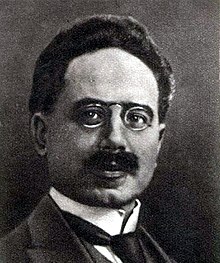
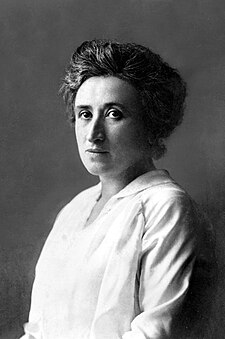
The leaders of the Spartacist Uprising, Rosa Luxemburg and Karl Liebknecht, were murdered.
Ebert had dealt with the uprising, but at a high price. He had put his government into the hands of the army and the Freikorps, neither which were loyal.
Karl Liebknecht


Rosa Luxemburg

After the Treaty of Versailles, another attempted revolution occurred. In 1920, March, Freikorps units led by Wolfgang Kapp marched into Berline and declared a new national government. The army did not stop them.

To stop this revolution, Ebert appealed to the workers to help them. The workers started a strike and this strike was so successful that Kapp's Putsch , the declaration of the new government, was destroyed. Those who participated in the putsch were not punished.

Wednesday, February 2, 2011

Set Notation

Special Number Sets
There are some number sets we refer to frequently and so we give them special symbols. Be sure to be very familiar with these special number sets as they may as well be tested in your algebra exam.


N is the natural numbers. This is also known as the counting numbers. 

Such numbers are numbers like 1,2,3,4,5,6,7,8 and may include 0 but must not be less than 0.

It can be any number equal or larger than 0 that is a WHOLE number...For example, you can have 432634623. Its a whole number. But you cannot have 8.8. Its a decimal. 

Integers
Z is a representation of all the integers. This includes ALL the whole numbers. Quite similar to all natural numbers but this time you can include Negative numbers such as -77.


Real Numbers
R is a representation of all real numbers, or basically any number you can think of. It can be a whole number, a decimal, a irrational function, any number that exists.

German History- Treaty of Versailles Part 2

If you read the last blog on the Terms of the Treaty of Versailles, you will probably realize that the Germans did not like the Treaty. Who would? I mean, who would want to pay 6.6 billion dollars...

So, the Germans hated the treaty..But why??

1. The Germans believed they had not lost the war, but instead was 'stabbed on the back' by the 'November Criminals'(Communist, Jews). Prominent Generals in the German army during World War I such as Erich Ludendroff encouraged this view. They believed if it wasn't for these weak politicians aka November Criminals, Germany would continue fighting to preserve its honor and glory.

2. The Germans thought the Treaty of Versailles would be like the 14 points Woodrow Wilson, the President of the United states stated. The 14 points was a series of points which would promote World peace such as setting up a League of nations and it was oriented towards a peaceful treaty and that Germany should be given a chance to recover. The treaty was no where like that, as from the actual terms of the Treaty of Versailles, you should be able to tell that it wasn't giving Germany any chances to recover.

3. The Germans were not invited to any of the negotiations, which the Germans perceived as a 'diktat', dictated peace.

4. The Germans had to follow Article 231, which meant they were to blame for the war. In the German view, they had been forced into the war due to its alliance with other European nations. They did not believe they should receive sole blame for the war.

So, here are the reasons why the Germans hated the Treaty of Versailles. Here are only a few points, but they are quite significant and will be enough to score you full marks in your answer if you write it up in a logical order.

If you want to find out more reasons why the Germans hated the treaty, feel free to search google.

German History (1919-1945) Part 1

The very first unit you will learn when studying German history is the 'Treaty of Versailles'.

Most of you should know that there was a war fought in the early 20th century called World War I. And most of you should know that Germany had lost the war. When they lost, they did not just get let off. They were punished. The Germans, who had lost the war, were forced to sign a treaty. This treaty was known as the

'TREATY OF VERSAILLES"

The Treaty was officially signed on June 28th, 1919 in Paris, with the victorious nations, Britain, France and the United States of America, and the nations that lost the war, Germany, Austro-Hungary, Turkey.

In the German history course, we only have to look at the Treaty of Versailles in the German point of view and how it explicitly 'affected' Germany. So, what were the terms of the treaty?

Well, there are so many...But here are a few major terms that you really should learn. The terms are split into four categories, General, Financial, Territorial and Military.

General

1. The Germans had to pay what we call 'reparations', also known as a fine. The sum they had to pay was astronomical. If we were to convert the amount of reparations the Germans had to pay into modern currency, it would total up to 6.6 billion pounds! This would be used to rebuilt land destroyed during the war.

2. The Germans had to accept blame for the war under Article 231.

3. A 'League of Nations' would be created to preserve world peace and prevent future wars.

Financial

The Germans lost vital industrial territory which would prevent it from rebuilding its economy. Examples include the Saar and Upper Silesia, which were vital industrial regions previously controlled by Germany.

Before the war, Germany was united with Austria. This was known as 'Anschluss'. In the 'Treaty of Versailles', the Germans were forbidden Anschluss, in an attempt to keep her economic potential to a minimum.

Territorial
The Germans also lost alot of land as stipulated by the 'Treaty of Versailles'.


This map shows the land Germany lost to nations represented by the country flag.

Some significant territorial loses are:

1.In 1870, Germany conquered Alsace Lorraine in France after defeating them in a war. In the 'Treaty of Versailles', Alsace Lorraine was returned to France.

2. The Rhineland, which was an important industrial section in Germany, was demilitarized, which meant no German army could operate inside.
3.North Schleswig was returned to Denmark following a plebiscite.

4. The Saar, Danzig and Memel were put under the control of the League of Nations.

5. Germany had knocked Russia out of the war in 1917 and signed a treaty called Brest-Litvosk Treaty, which entitled Germany to a vast amount of Russian land. The Germans had to return all this land. Some of this land was made into states such as Latvia, Estonia and Lithuania. An enlarged Poland also received some of this land.

Military
Many military sanctions were also imposed on the German army.

For example:

1. The German army was reduced to a maximum of 100,000 soldiers and conscription was banned. Conscription is a fancy word for saying that one must join the army. 

2.German Naval Forces were reduced to 15,000 men, 6 cruisers,  6 battle ships, and 12 destroyers. No submarines were allowed.

3.Import and Export of weapons were banned.

4. Poison gas, armed tanks, armed planes were banned.


These are the terms of the Treaty of Versailles, well the most important ones you should know. The next part will focus mainly on why the Germans hated the Treaty, as this is a common question asked on exams, and it is a very interesting topic as the German hatred of the Treaty of Versailles is a reason why World War II eventually broke out.

Introduction to German History (1919-1945)

German History

The German history between 1918 and 1945 is definitely a very interesting period. Starting from 1919 to when Germany lost the first world war and was forced to sign the hated Treaty of Versailles to the demise of Hitlers Nazi Germany in 1945, this course will be tailored to those who have an unit study on Germany from 1919-1945.

This course will cover these following aspects

1. Treaty of Versailles, 1919
2. Weimar Republic
3.Hitlers Rise to Power
4. Nazi Rule- Gleichshaltung
5.World War II and its effect on the Nazis
6. German defeat.

Algebra-- Factorization

This lesson will be focused on this mathematical concept called factorization.

Now, what is factorization?

Well, the 'wikipedia' definition of Factorization is : decomposition of an object (for example, a number, a polynomial, or a matrix) into a product of other objects, or factors, which when multiplied together give the original. 

This is correct, but too complicated. Now, lets explore my definition of factorization. Factorization is basically finding the HIGHEST common factors between a polynomial, numbers, etc and then taking the highest common factor out into a separate bracket so when the highest common factor of the polynomial, function, numbers is multiplied by the polynomial, function or numbers DIVIDED by the highest common factor, we get the original polynomial, function, numbers.

Now, this may sound complicated. Well, ill do a ton of examples to negate the effects of the tedious explanation.


Example 1 Factorize, (2x+4)


Now, to tackle this problem, we first break up the function into its individual components; there is +2x (positive 2x) and +4 (positive 4)


Now, we evaluate the two numbers in the function 2x and 4.

We need to find the HIGHEST COMMON FACTOR between the two numbers 2x and 4

Well, if you work this out through your basic algebra skills, you'll solve that 2x and 4 have a HCF of 2.

As you can see, the greatest number in which 2x and 4 both divides into is 2. If you have any problems with solving common factors (http://www.jamit.com.au/htmlFolder/FRAC1004.html) will be a great place to start!

Now, we find that the HCF is 2. 

The next step is to divide the HCF by the original function. Why? I''ll tell you later.

So if you divide 2x+4 by 2, you get +1x and +2.

Factorization has this rule, and the rule is that the overall answer should be in the form X(a+b), where X is the HCF factor and (a+b) is the function we receive after dividing the HCF by the original function, in this case 1x+2. 


Now, the sign X(a+b) is a shorthand notation stating that we have to multiply X by a+b. In this case, we have to multiply 2 by (1x+2)


If you do not know how to multiply out functions together, then I have another tutorial coming soon describing this process.


Anyway, if you multiply 2 by (1x+2), you get (2x+4)....hey..isn't this a bit like what I said at first?


Let me quote it..'.we get the original polynomial, function, numbers.'

And so did we...We got what we started with. So the process you just encountered is correct.
Multiplying the X by a+b is just a way to check that you have the correct answer. You end with the function at the beginning, you are correct. You dont, you must have made a mistake.


So the final answer is 2(x+2)


Note: 1x can be alternatively written as x.


Example 2:


Factorize 6x+9


Again, first, analyze the individual components, 6x and 9. Then, find the HCF between them. You should get 3. Then, divide 3 by 6x and 9 by 3. You should get 2x and 3


Awesome! now, lets put it into X(a+b) form.


X, the highest common factor is 3.
a+b will be 2x+3


So, the answer will be 3(2x+3)


and if you checked by multiplying the answer out, you should get what we started off with.